

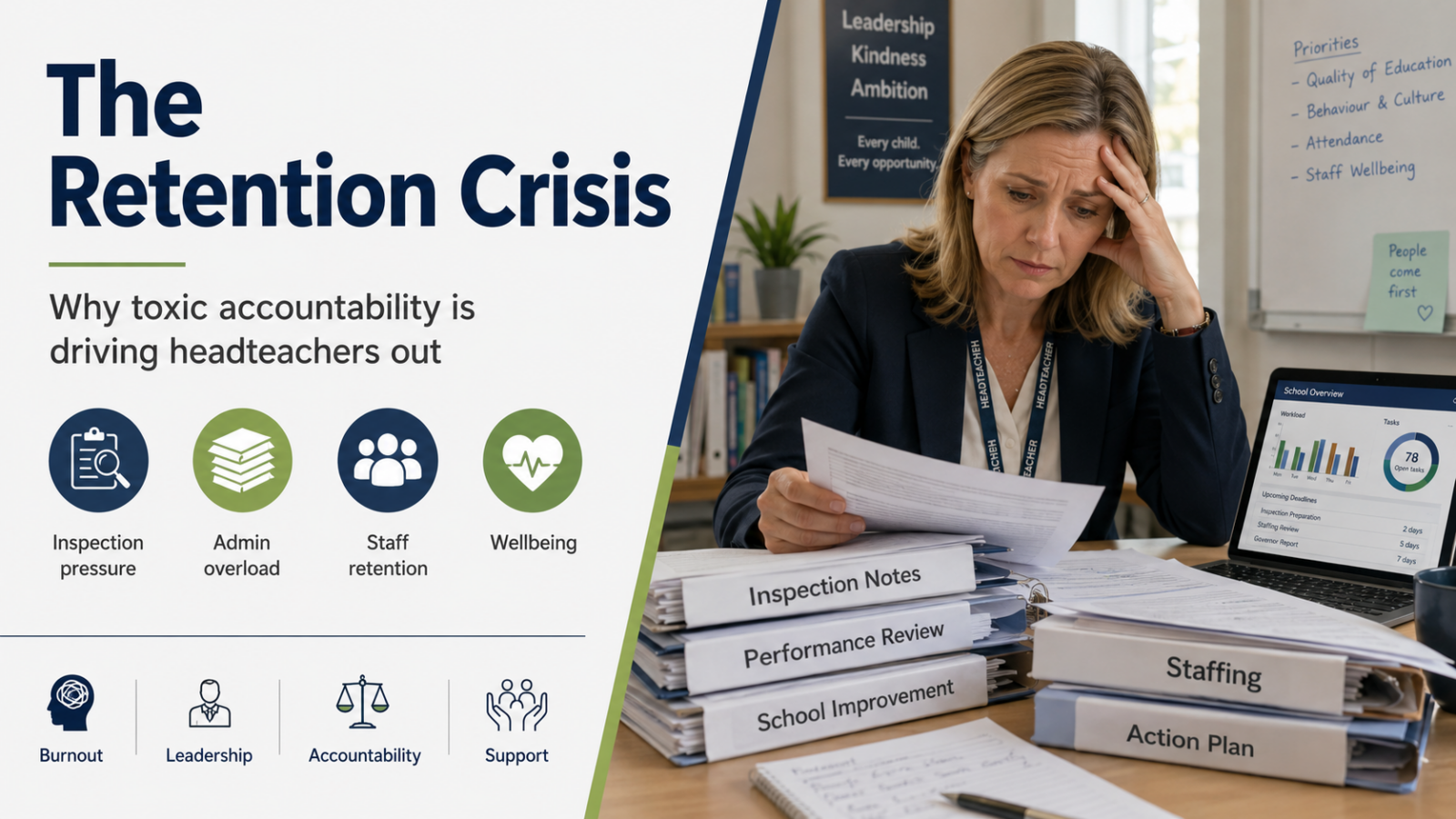
The relationship between elective home education (EHE) families and local authorities (LAs) across England has reached an unprecedented level of friction. As record numbers of parents choose to withdraw their children from formal school settings, a worrying systemic trend has emerged: local councils are increasingly using extra-legal gatekeeping, prolonged “cooling-off” periods, and bad-faith bureaucratic delays to obstruct a parent’s absolute legal right to deregister.
By grounding our analysis in the latest statutory data and legal frameworks – specifically referencing the core arguments in “The Retention Crisis: Why Toxic Accountability is Driving Headteachers Out” – this article dismantles these unlawful pushbacks and demonstrates how families can insulate themselves using precise operational documentation.
The True Scale of the Shift: What the Data Shows
The narrative that home education is a fringe choice practised by a tiny minority has been thoroughly debunked by official data. According to the Department for Education’s (DfE) mandatory census data for the autumn term 2025, there are an estimated 126,000 children electively home educated in England on any given census day, representing a significant 13% increase from 111,700 in the previous year. Looking across the full 2024/25 academic year, a staggering 175,900 children spent time in elective home education.
Crucially, the data reveal that this exodus is heavily driven by a failure of mainstream school environments to support neurodivergent and vulnerable learners:
- The SEND Disproportion: DfE figures show that 16% of EHE children require SEN support and 7% possess a full Education, Health and Care Plan (EHCP). This is significantly higher than the general school population averages (14% and 5%, respectively), proving that home education is frequently a protective measure taken by parents of neurodivergent children.
- The Mental Health Catalyst: Among known primary reasons provided by families, 16% explicitly cited mental health as the driving force behind removing their child from school, followed closely by deep-seated school dissatisfaction and inadequate SEND provisions.
The Legal Reality vs. Bureaucratic Overreach
Under English law – specifically the Education Act 1996 and the Education (Pupil Registration) (England) Regulations 2006 – the right to home educate is conditional only upon the parent providing an education suitable to the child’s age, ability, and aptitude.
The Immediate Legal Mechanism: For a child enrolled in a mainstream school, deregistration requires nothing more than a written notification sent by the parent to the school’s headteacher. The moment this notification is received, the school is legally mandated to remove the child’s name from the admissions register immediately and notify the local authority.
LAs have absolutely no statutory power to “veto,” “approve,” or delay this process. Yet, councils are routinely operating ultra vires (beyond their legal powers) by employing the following unlawful pushbacks:
- Enforcing Mandatory “Cooling-Off” Periods: Many LAs instruct schools to delay processing deregistrations for up to two weeks to force a multi-agency meeting. This is a direct violation of pupil registration laws; a child cannot be held in a school placement against a parent’s explicit written instruction.
- Demanding Prior Approvals: Unless a child is registered at a designated special school under a named EHCP (where LA consent is required), no prior permission is required. LAs frequently misapply this rule to mainstream pupils with EHCPs, falsely claiming that a multi-agency panel must approve the deregistration first.
- Pre-emptive Threats of Truancy and Fines: Parents exercising their right to deregister are occasionally threatened with Attendance Orders or fines, with councils unlawfully treating the immediate gap between school exit and EHE tracking as an unauthorised absence.
The Malicious Misuse of CME and Section 19 Pathways
When a parent submits a deregistration notice due to severe school anxiety or lack of SEND support, LAs often exploit Children Missing Education (CME) pathways. Rather than logging the child correctly as electively home educated, they classify them as missing education to initiate aggressive safeguarding interventions.
The Local Government and Social Care Ombudsman (LGSCO) has repeatedly intervened and found local authorities at fault for these exact delay tactics. In numerous landmark rulings, such as those involving Cheshire East and Hampshire councils in April 2026, the Ombudsman penalised councils for failing to properly consider their duty to provide alternative education and for demanding excessive, intrusive proofs of home education plans before formally closing a school file. The LGSCO maintains that councils must not use bureaucratic delays to withhold alternative provision or stall a family’s chosen educational route.
Defending Family Autonomy with E.L.A.H.A
To defeat systemic gatekeeping, families must transition from a defensive posture to an organised, data-driven framework. This is where a dedicated operational and advocacy platform like E.L.A.H.A becomes essential.
By utilising a structured digital workspace, families can proactively nullify unlawful LA actions:
- Instantaneous, Legally Binding Templates: E.L.A.H.A provides automated, legally vetted deregistration notices that cite precise statutory regulations, preventing headteachers and LA caseworkers from pretending they have the right to delay or reject the notice.
- Immutable Audit Trails: If a council attempts to claim a child is “missing education” or triggers a bad-faith attendance investigation, E.L.A.H.A maintains an unassailable chronological log of all communications, submission receipts, and statutory notifications. This creates a bulletproof defence ready for the Ombudsman or legal counsel.
- Strengths-Based “Education Philosophies”: Under Section 437(1) of the Education Act, an LA can issue an informal inquiry asking parents to show that a suitable education is being provided. E.L.A.H.A enables parents to securely compile neuro-affirming educational portfolios, progress reports, and philosophy statements. Presenting an organised, structured digital spine forces the LA to acknowledge that a suitable education is in place, eliminating the pretext for coercive home-visit demands.
Local authorities rely on a family’s lack of legal clarity and organisational fatigue to enforce compliance. By countering administrative overreach with impeccable documentation and unwavering legal literacy, home-educating families can confidently reclaim control over their children’s futures.
Sources & References
- Original Source Documentation: The Retention Crisis: Why Toxic Accountability is Driving Headteachers Out.
- Department for Education (January 2026). Elective Home Education, Autumn Term Statistics for England.
- Education Act 1996. Section 7 (Parental Duty) & Section 437 (School Attendance Orders).
- Education (Pupil Registration) (England) Regulations 2006. Regulation 12: Dual Registration and Deletion from Register.
- Local Government and Social Care Ombudsman (2026). Education and Alternative Provision Case Decisions
- Latimer Tuition (2026). Home education statistics: England’s latest figures.